How Often Google Updates Its Algorithm
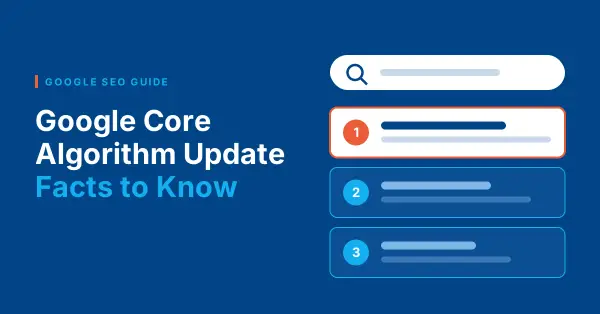
Google claims to update its search algorithm several thousand times per year. In the vast majority of cases, these updates are too small to notice. Even so, the larger changes are expected to bring a new series of SEO trends for businesses and marketers alike.
What Are Google Algorithms?
Google’s algorithms are a complex system used to retrieve data from its search index and instantly deliver the best possible results for a query. The search engine uses a combination of algorithms and numerous ranking signals to deliver web pages ranked by relevance on its search engine results pages (SERPs).
Major Google Algorithm Updates
In this article, we look at the most critical search algorithm changes.
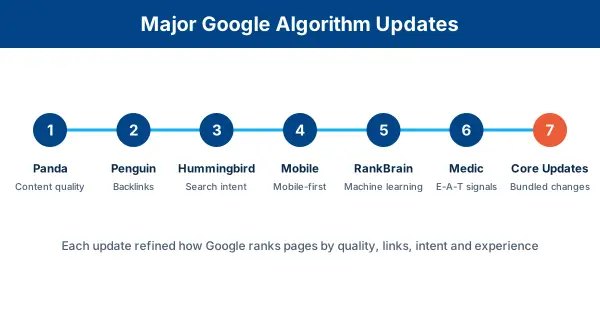
1. Panda: Content Quality Score
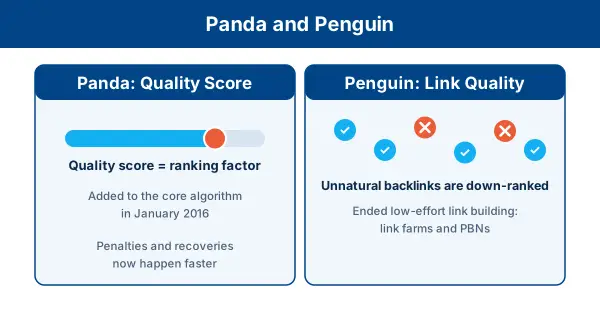
The Panda algorithm update assigns a so-called “quality score” to web pages. This score is then used as a ranking factor. Initially, the effects of Panda were mild, but in January 2016 it was permanently incorporated into Google’s core algorithm. Since then, update rollouts have become more frequent, so both Panda penalties and recoveries now happen faster.
2. Penguin: Unnatural Backlinks
The second is Google Penguin, whose objective is to down-rank sites whose backlinks look unnatural. This update put an end to low-effort link building, like buying links from link farms and PBNs.
3. Hummingbird: Understanding Search Intent
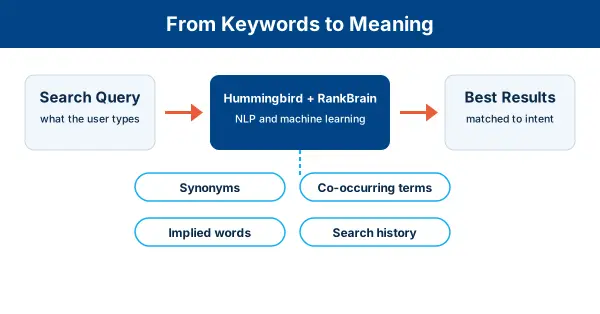
The next is the Hummingbird algorithm, which helps Google better interpret search queries and provide results that match searcher intent (as opposed to the individual terms within the query). While keywords continue to be important, the Hummingbird algorithm makes it possible for a page to rank for a query even if it doesn’t contain the exact words the searcher entered. This is achieved with the help of natural language processing that relies on latent semantic indexing, co-occurring terms and synonyms.
4. Mobile Updates: The Shift to Mobile-First
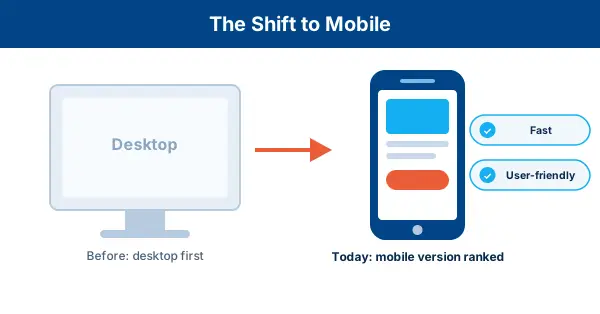
The fourth is the Mobile update. This, and subsequent mobile search updates (2018, 2020), have shifted the focus from the desktop version to the mobile version of your website. Today, Google ranks all websites based on how fast and user-friendly their mobile versions are.
5. RankBrain: Machine Learning in Search
Next comes RankBrain, which is a part of Google’s Hummingbird algorithm. It is a machine learning system that helps Google understand the meaning behind queries and serve best-matching search results in response to those queries. Google calls RankBrain the third most important ranking factor. While we don’t know the exact formula behind this major update, the consensus is that RankBrain is responsible for customizing a user’s Google search results. Google goes beyond a person’s search query and takes into account the larger context, like synonyms, implied words, and personal search history.
6. Medic: E-A-T and High-Stakes Websites
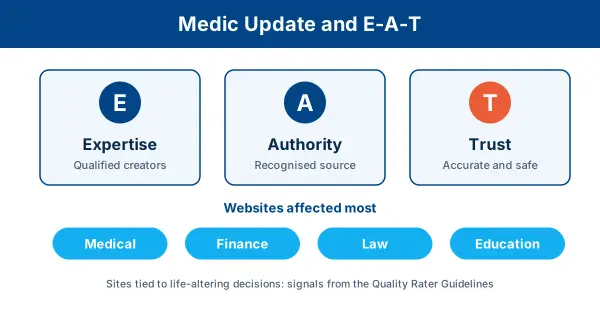
The Google Medic update seemed to disproportionately affect medical websites as well as other websites that have to do with potentially life-altering decisions (finance, law, education). Although not explicitly confirmed, Google representatives have hinted that the update implemented some of the E-A-T (expertise, authority, trust) signals from the Quality Rater Guidelines document.
Google Core Updates
As far back as 2017, Google started to refer to bigger updates as Google core updates. Since then, there has been even less transparency about what those updates are and which parts of search they are intended to improve. SEOs often track post-update ranking shifts and try to figure out what exactly has changed, but there is rarely a conclusive observation. Google core updates are likely just improvements on previous Google updates, or perhaps bundles of smaller updates tied together.
Conclusion: Put These Updates into Your SEO Strategy
These were some of the major Google algorithm updates, which are surely resulting in changes in SEO patterns. So don’t wait: start incorporating these updates into your SEO strategy.
